Hard Water in Bathroom: White Stains, Geyser Scale & Low Water Flow
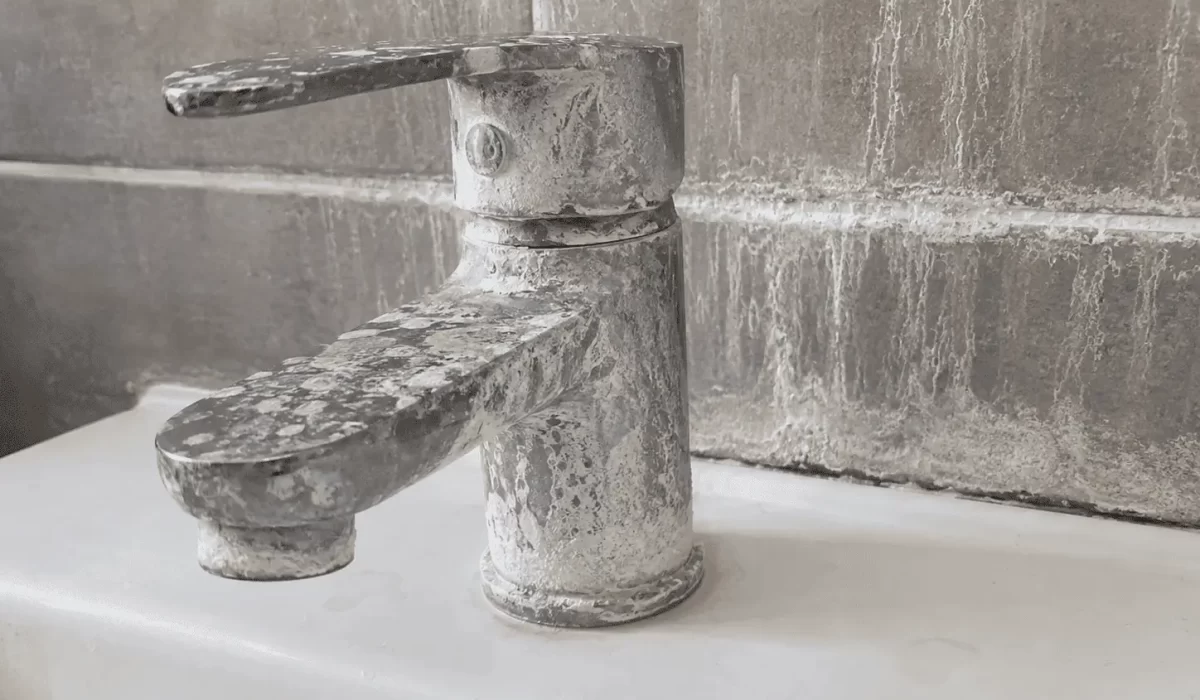
White marks on taps, a blocked shower, dull bathroom fittings and slow geyser heating are often signs of hard water. These issues are common in homes using borewell, tanker and mineral-rich groundwater.

Ethix Water Conditioner – Salt-Free Scale Management
What Is Hard Water in a Bathroom?
Hard water is water with a higher concentration of dissolved minerals, mainly calcium and magnesium. As water passes through underground rocks and soil, it can collect these minerals naturally. In many Indian homes, this is common with borewell water, tanker water and groundwater supplies.
When this mineral-rich water is heated in a geyser or dries on tiles, taps and glass surfaces, it can leave behind visible deposits. This is why bathroom fittings may lose their shine even after regular cleaning.
Hard water does not always look dirty. It can appear clear, but the mineral content may still cause scaling problems inside hidden pipelines, geysers and shower fittings.
Six Warning Signs of Hard Water at Home
White Stains on Taps
Dry water droplets can leave chalky white marks on taps, wash basins, tiles and glass partitions.
Shower Blockage
Scale deposits can accumulate inside shower nozzles and aerators, reducing water flow over time.
Geyser Scaling
Mineral deposits may build inside geysers and water heaters, affecting heating performance and maintenance needs.
Low Soap Foam
Hard water can reduce the lather formed by soap, body wash, shampoo and detergent.
Stiff Clothes
Laundry washed in hard water may feel rough, stiff or less fresh after drying.
Frequent Plumbing Cleaning
Bathroom fittings, taps, geysers and pipelines may need repeated descaling and cleaning.
How Does Hard-Water Scale Build Up?
Scale formation usually happens gradually. It may not be visible inside pipelines at first, but regular mineral deposits can slowly affect water flow and equipment efficiency.
Mineral-Rich Water Enters
Water containing calcium and magnesium flows through pipelines, taps, geysers and bathroom fittings.
Heat or Evaporation Happens
When water is heated or dries on a surface, dissolved minerals can become more likely to settle.
Scale Deposits Form
Over time, these deposits can appear as white stains outside and hard scale layers inside water equipment.
TDS and Hardness Are Not the Same
Many people assume that high TDS always means high hardness. However, TDS and hardness measure different aspects of water quality. TDS represents total dissolved substances, while hardness mainly refers to calcium and magnesium content.
A water test is the best way to understand your exact requirement. Depending on the results, you may need scale management, filtration, iron removal, a water softener, an RO purifier or a combination of systems.
Which Water Treatment Is Right for Your Problem?
| Water Problem | Suitable Treatment Direction | Main Purpose |
|---|---|---|
| Scale in pipelines, geysers, taps and showerheads | Salt-free water conditioner / scale-management system | Helps manage scale formation in water-using systems |
| Need a specific reduction in hardness reading | Resin-based ion-exchange water softener | Hardness reduction through softening process |
| Drinking water with high dissolved solids | RO water purifier, based on water test | Drinking-water treatment |
| Mud, sand or suspended particles | Sand filter, sediment filter or suitable pre-filtration | Particle removal |
| Iron staining, smell or colour | Iron-removal or specialised water-treatment system | Iron and odour management |
Ethix Water Conditioner for Hard-Water Scale Management
Ethix Water Conditioner is designed for homes, apartments, societies, bungalows, farmhouses, commercial properties and industrial applications facing hard-water scale problems.
It is a salt-free, chemical-free and media-free water-conditioning solution intended for scale-management applications. Ethix does not claim to reduce TDS and should not be treated as an RO system. For a specific numerical reduction in hardness, a suitable resin-based water softener may be required.
- No salt refill requirement
- No chemical dosing
- No resin or media replacement
- No brine discharge
- No regeneration water wastage
- Suitable for scale-prone water systems
Information Needed for the Right Ethix Recommendation
To recommend a suitable model, the Ethix team may review the water source, installation location and water usage requirement.
- Water source: Borewell, tanker, municipal or mixed water
- Motor capacity: HP and approximate water flow
- Pipeline size: Inlet or outlet size in inches
- Daily water usage: Home, society or commercial consumption
- Visible problem: Scale, stains, geyser issue or shower blockage
- Water report: Hardness, TDS, iron and pH report if available
Frequently Asked Questions
Why do I get white stains on bathroom taps?
White stains are commonly caused when mineral-rich water dries on taps, tiles, glass surfaces and bathroom fittings. The visible residue can be a sign of hard-water scale.
Can hard water block a showerhead?
Yes. Mineral deposits can gradually collect inside shower nozzles and aerators, reducing water flow and creating uneven spray patterns.
Does hard water affect geysers?
Hard-water minerals can form scale deposits inside geysers and water heaters. This may increase cleaning and maintenance requirements over time.
Does Ethix Water Conditioner reduce TDS?
No. Ethix Water Conditioner is not an RO system and should not be used to claim TDS reduction. It is designed for salt-free hard-water scale management.
How can I confirm hard water at my home?
White scale, poor soap foam, blocked showerheads, stiff clothes and geyser scaling are common signs. A proper water test provides the most reliable confirmation.
Protect Your Bathroom, Geyser and Plumbing from Hard-Water Scale
Share your water source, motor HP, pipeline size and visible hard-water problem with Ethix for a suitable recommendation.