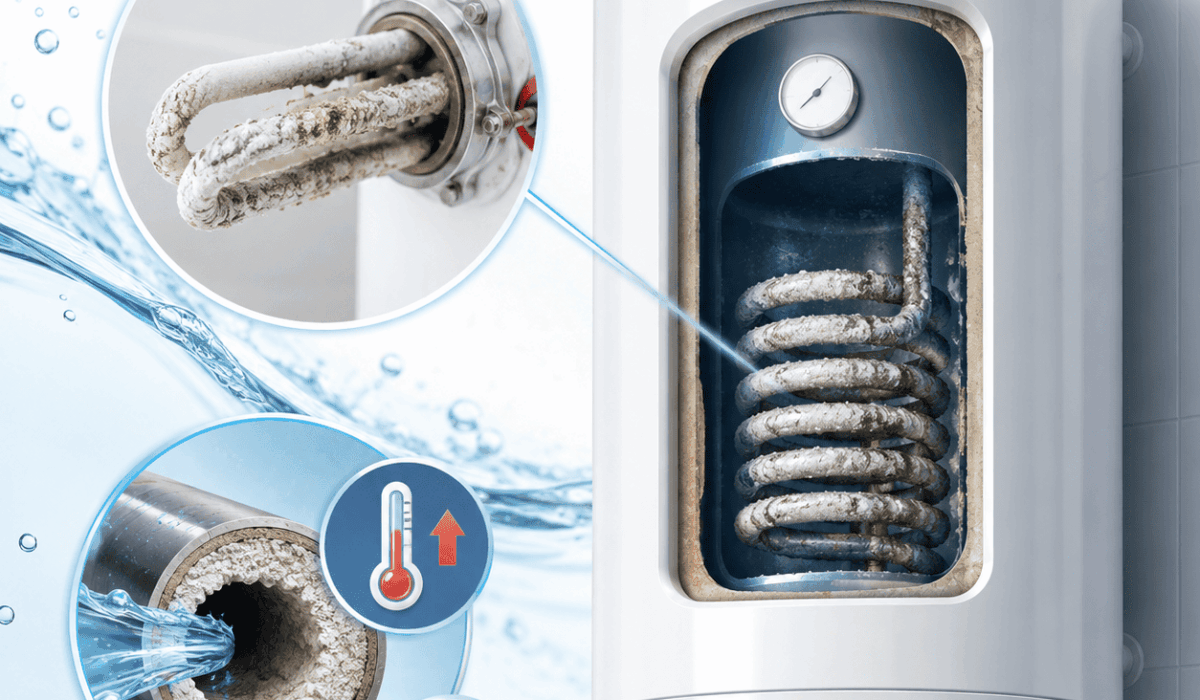
The benefits of a water softener start with one important result: reducing dissolved calcium and magnesium hardness. If you notice soap scum, stiff laundry, white deposits on taps or mineral scale inside your geyser, hard water may be part of the problem. But not every home needs the same treatment. A traditional water softener removes hardness through ion exchange, whereas the salt-free Ethix Water Conditioner is intended to help reduce scale deposits without removing hardness minerals.
A properly sized ion-exchange softener reduces measurable water hardness. This may make soap work more effectively, limit hardness-related deposits, and support laundry and hot-water equipment. An Ethix Water Conditioner is a different option for people primarily concerned about scale buildup who do not require lower hardness readings. Choose using a hardness test and your actual water-use requirements.
What Is a Water Softener and How Does It Work?
A conventional water softener uses an ion-exchange resin to replace hardness-causing calcium and magnesium ions, usually with sodium ions. Once the resin's capacity is used, the system regenerates with a salt-brine solution. The right vessel size, resin volume and regeneration schedule depend on the hardness level, water demand and flow rate.
Hard water and TDS are not the same. A TDS meter cannot measure total water hardness, so a proper hardness test is important before selecting a system.
7 Practical Benefits of a Water Softener
1. Less Hardness-Related Scale
Reducing calcium and magnesium can lower the potential for mineral deposits in compatible pipes, water heaters and fittings.
2. Better Soap Performance
Soap reacts with hardness minerals to form scum. Softer water can improve lather and reduce the amount of soap needed in some uses.
3. Easier Laundry Care
Reduced hardness can help address mineral-related residue and stiffness in towels and clothing. Actual results depend on detergents and washing conditions.
4. Fewer Marks on Fixtures
Lower hardness may reduce white mineral spotting on taps, shower screens, sinks and utensils. Existing stains still need cleaning.
5. Support for Water Heaters
Limiting new deposits can be useful for water-heating equipment, where scale may reduce heat transfer and create service needs.
6. More Predictable Process Water
Hotels, laundries and selected industrial systems may require a specified outlet hardness that a correctly operated softener can deliver.
7. Better Treatment Planning
A measured hardness target allows the installer to size equipment, plan regeneration and verify the actual water-treatment result.
For a basic explanation of hardness, soap scum and mineral deposits, see the U.S. Geological Survey's guide to hard water.
Water Softener vs Ethix Water Conditioner: Which Benefits Matter?
People often use “softener” and “conditioner” interchangeably, but the difference matters. Ethix offers salt-free water conditioning for scale-related applications, and resin-based softening is a separate treatment for measured hardness reduction.
| Feature | Ion-Exchange Water Softener | Ethix Water Conditioner |
|---|---|---|
| Primary purpose | Reduce dissolved hardness | Help reduce scale deposits in suitable systems |
| Removes calcium and magnesium? | Yes, through ion exchange | No |
| Lower laboratory hardness reading? | Yes, when correctly sized and operated | No |
| Salt regeneration | Normally required | Not required |
| Brine / regeneration discharge | Typically generated | No softener-style regeneration discharge |
| Best fit | Applications with a defined hardness target | Selected applications where scale deposits are the concern |
| Does it reduce TDS like RO? | No; not designed for this | No |
Benefits of Ethix Water Conditioner as a Salt-Free Alternative
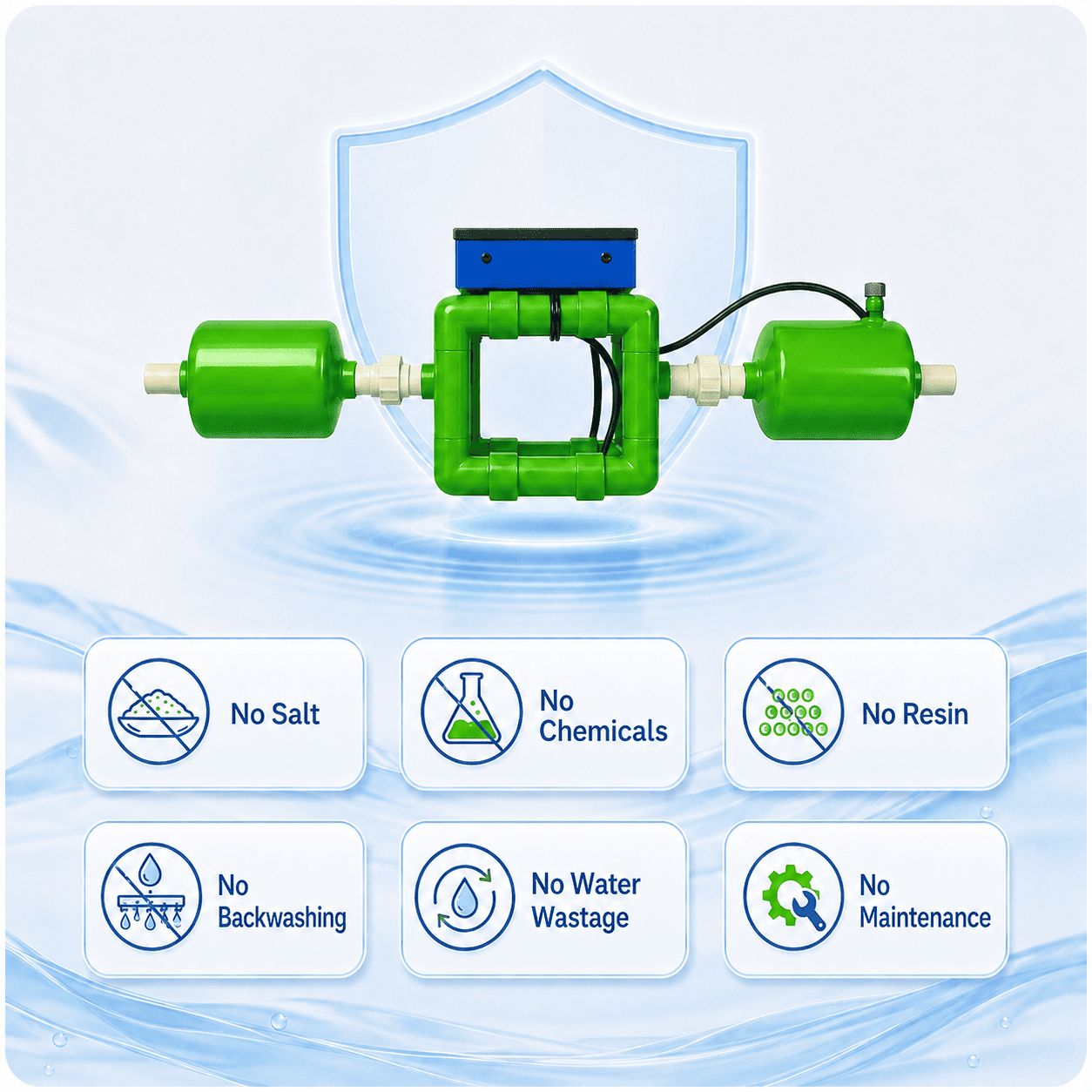
The Ethix Water Conditioner is intended to help reduce scale deposits in suitable pipelines and equipment. Its design does not use a resin bed, salt refilling or softener-style backwashing. That can be useful where the primary concern is recurring mineral buildup rather than laboratory hardness reduction.
- No salt refilling: No brine-regeneration salt is needed for the conditioning process.
- No routine chemical dosing: The conditioning process does not depend on chemical dosing.
- No resin regeneration: There is no ion-exchange resin bed to regenerate or replace as part of a softener process.
- No regeneration wastewater: The unit does not use the brine-discharge cycle of a conventional softener.
- Residential and larger applications: Model choice depends on pipe size, water flow, pump capacity and installation conditions.
The product is not a guaranteed solution for dry skin, hair texture, water taste or reduced electricity bills. Those outcomes depend on many factors, and the conditioner does not remove dissolved hardness minerals.
How Can Homes Benefit From the Right Water Treatment?
For independent homes and bungalows, common concerns include geyser scale, white marks around taps and mineral deposits in water-using appliances. Start with a water test, then decide whether the requirement is genuinely softened water or a salt-free approach to scale deposits. Explore the Ethix Delta Series home water conditioner for suitable residential plumbing applications.
Water Softener Benefits for Housing Societies and Commercial Buildings
Societies, hotels, hostels, hospitals and laundries may need different treatment in different water lines. A laundry requiring a measured low-hardness supply may use a softener. A main domestic line experiencing scale deposits may be evaluated for conditioning. The selection should consider the actual water report, peak flow, daily demand, tank arrangement and downstream equipment.
Industrial Water Softener or Conditioner: What Should You Choose?
In industrial use, water-quality requirements must come first. Boilers, RO systems, heat exchangers and process lines can have equipment-specific hardness limits. Use a correctly engineered softener or suitable pretreatment when actual hardness reduction is mandatory. A conditioner should not be assumed to meet that specification. For industrial utilities concerned about scale, Ethix can assess whether conditioning is suitable once water chemistry, flow and operating conditions are available.
How to Choose a Water Softener or Conditioner for Your Property
- Test the water: Measure total hardness in mg/L as CaCO3, TDS, pH and other relevant parameters.
- Define the problem: Are you trying to reduce a hardness reading, limit deposits, remove contaminants or improve drinking-water quality?
- Check plumbing details: Record pipe diameter, pump HP, peak flow, tank capacity and daily consumption.
- Confirm installation scope: Ask what is included in the equipment quote, GST, plumbing, electricity and commissioning.
- Compare the right technology: Select a softener for hardness removal and consider a conditioner only for suitable scale-related applications.
For more information, read the hard water softener comparison and the hard water problems guide.
Frequently Asked Questions About Water Softener Benefits
What is the biggest benefit of a water softener?
Its main benefit is actual reduction of calcium and magnesium hardness. This can help with soap performance and lower the potential for hardness-related scale deposits.
Is a salt-free water conditioner the same as a water softener?
No. An ion-exchange softener removes hardness minerals. Ethix's salt-free conditioner is intended to help reduce scale deposits but does not remove calcium and magnesium or lower hardness ppm.
Does Ethix Water Conditioner make water soft?
No. The conditioner does not produce softened water in the ion-exchange sense. If you need a low hardness reading, assess a suitable resin-based water softener.
Will a water conditioner improve skin, hair or drinking-water taste?
These improvements should not be promised from scale conditioning. The conditioner does not remove dissolved hardness minerals, disinfect water or make unsafe drinking water safe.
Can a water softener be used before an RO plant?
Yes, when hardness reduction is required for the RO pretreatment design. The correct configuration depends on a full water analysis and membrane specifications.
Does a water softener lower TDS?
Conventional ion-exchange softeners are not designed to lower total dissolved solids. They exchange hardness ions for other ions. RO may be appropriate for dissolved-solids reduction after testing.
What information does Ethix need to recommend a system?
Share your water source, hardness report, TDS, pipe size, pump HP, daily demand, flow rate and main water-related concern.
Need Help Choosing Between a Softener and Conditioner?
Tell us your water hardness, source, application, pipe size and pump details. Ethix can help review which treatment direction is suitable for your property.
Request Expert GuidanceCall 1800-123-6463