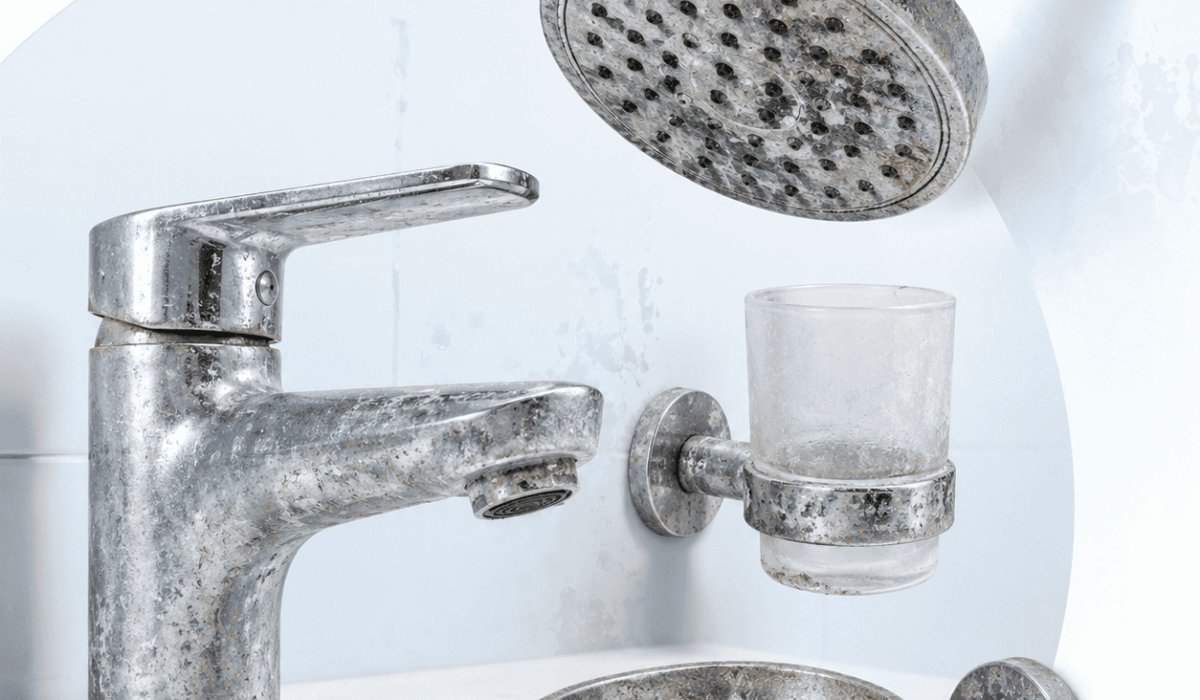
The side effects of hard water often show up in ordinary daily routines: white marks on taps, soap that does not lather easily, cloudy glassware, deposits in geysers and showerheads that need frequent cleaning. These issues can be frustrating, especially when the same stains return soon after you clean them.
Hard water contains dissolved calcium and magnesium. The minerals are usually invisible in the water itself, but they can leave residue and form scale on surfaces and inside equipment. This guide explains nine common effects of hard water on everyday life, how to identify them and which treatment options may help.
Quick answer: What are the main side effects of hard water?
Hard water can cause mineral stains, soap scum, reduced lather, laundry problems and scale in pipes, showers, geysers and appliances. Some people notice changes in how their skin or hair feels after washing. The impact varies with water chemistry, temperature and use. A water hardness test is the best way to confirm the problem.
What Is Hard Water?
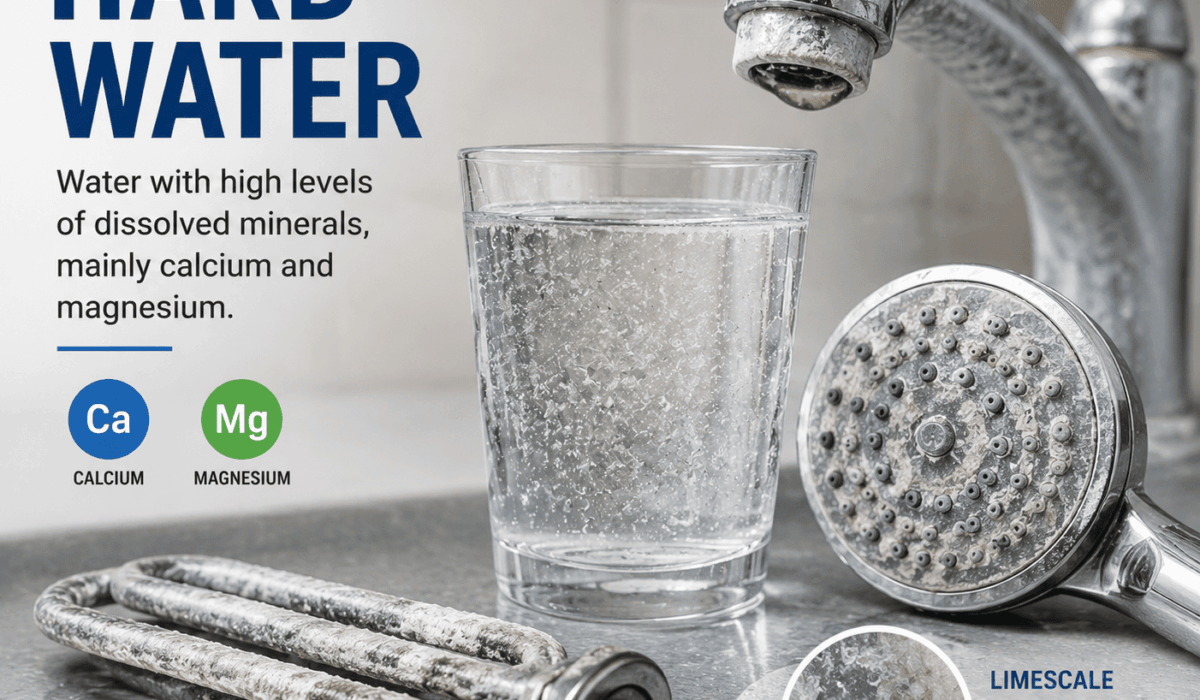
Hard water is water with a relatively high concentration of calcium and magnesium minerals. Water can pick up these minerals as it moves through soil, limestone and other rocks. Borewell water is one possible source, although hardness can also occur in municipal and mixed supplies.
Hardness is normally reported in mg/L as calcium carbonate (CaCO3). It is different from total dissolved solids (TDS): a TDS meter cannot tell you how much calcium and magnesium hardness the water contains. Read the hard water vs TDS guide before choosing treatment based on a meter reading.
The U.S. Geological Survey's explanation of water hardness also describes how calcium and magnesium affect soap, scale and water-using equipment.
How Can You Identify Hard Water at Home?
There is no single symptom that proves your water is hard. However, several of these signs together are a good reason to test the water:
Recurring white marks on taps, shower glass and tiles.
Spray holes gradually becoming blocked by deposits.
Less lather and more stubborn soap residue.
Clothes or towels feeling stiff after washing.
Scale found during geyser or heater servicing.
Water spots on glasses, utensils and sinks.
Low water pressure, skin discomfort and appliance problems can also have other causes. A basic hardness test and inspection are more reliable than judging water quality by appearance alone. Use the Ethix water hardness calculator to understand a measured result.
9 Side Effects of Hard Water on Daily Life
1. Skin and Hair May Feel Dry or Rough
Hard water can interact with soaps and cleansers, leaving more residue behind after bathing. Some people notice that their skin feels tight or that their hair becomes less manageable. The experience differs by person, shampoo, skin condition and water source.
Research has explored an association between water hardness and skin irritation, but hard water alone should not be treated as the confirmed cause of a skin or hair condition. A water conditioner is not a medical treatment, and reducing scale deposits does not prove improved skin or hair outcomes. Read our dedicated guide to hard water effects on skin and hair.
2. Soap and Shampoo May Produce Less Lather
Calcium and magnesium react with traditional soap and can form soap scum. This makes rinsing and cleaning more difficult in some households and may increase the amount of soap needed. The effect depends on the cleaning product, so not every modern detergent behaves the same way.
3. Laundry Can Feel Stiff or Look Dull
Hardness minerals and detergent residue can affect the feel of towels, bedsheets and clothing. Some households notice less satisfactory washing results or spend longer adjusting detergent quantity and cleaning cycles. Washing machines may also collect mineral deposits in water-contact components over time.
See practical advice in the hard water and washing machine guide.
4. White Stains Return on Taps and Bathroom Tiles
When mineral-rich water evaporates, it can leave chalky marks on chrome fittings, tiles, shower screens and washbasins. These spots are often noticeable even when the bathroom has been cleaned recently. Mineral deposits already stuck to the surface may need suitable cleaning; a water treatment device will not automatically remove existing stains.
5. Scale Can Restrict Pipes and Shower Flow
In some water systems, mineral scale accumulates inside hot-water lines, valves and showerheads. Deposits can narrow openings and contribute to uneven flow. However, reduced pressure can also come from pump, plumbing or sediment problems, so inspect the system before blaming hardness alone.
6. Geysers and Water Heaters Can Develop Scale
When certain hard waters are heated, calcium carbonate scale may form on heating surfaces or inside tanks. A thick layer can interfere with heat transfer and increase servicing needs. In severe cases, scale may reduce heating efficiency; the actual impact depends on the equipment, water chemistry and extent of deposits.
Regular appliance inspection remains important. Do not assume that installing a conditioner will reverse existing equipment damage or guarantee lower electricity bills.
7. Water-Using Appliances May Need More Cleaning
Washing machines, dishwashers, solar water heaters and other equipment that regularly contacts water can experience mineral deposits. Depending on the appliance and water source, this may add to cleaning or servicing requirements. Always follow the manufacturer's descaling and maintenance instructions.
8. Kitchen Glassware and Sinks Show Water Spots
Cloudy glasses, water spots on steel utensils and marks around kitchen taps are familiar hard-water complaints. Some spots are removable mineral residue, while others may have different causes. Choosing the right cleaning method and keeping wet surfaces dry can help reduce visible marks.
9. Cleaning and Maintenance Costs Can Add Up
A little extra detergent, repeated cleaning, clogged showerheads and occasional appliance servicing may seem like separate expenses. Together, they can increase the effort and cost of maintaining a home. These costs vary significantly; there is no single savings figure that applies to every property.
How to Reduce Hard Water Problems at Home
The best solution depends on whether you want less scale on surfaces, a lower measured hardness value or treated drinking water. Those are different objectives.
| Your main requirement | Suitable direction | What to know |
|---|---|---|
| Remove dissolved hardness minerals | Ion-exchange water softener | Can reduce calcium and magnesium; usually requires salt regeneration. |
| Help reduce scale deposits without salt regeneration | Salt-free water conditioner | Does not remove hardness or reduce TDS; effectiveness depends on the application. |
| Reduce certain dissolved contaminants for drinking or process water | Suitable RO treatment | Selection should follow a complete water-quality assessment. |
| Remove visible sand or suspended particles | Sediment or media filtration | Does not normally remove dissolved hardness minerals. |
For a broader breakdown of water-treatment options, see our hard water softener and conditioner comparison.
How Ethix Water Conditioner May Help With Hard Water Scale
Ethix Water Conditioner is a salt-free system intended to help reduce scale deposits in suitable plumbing and water-using applications. It is offered for homes, villas, housing societies and selected commercial, agricultural and industrial water lines, with sizing and installation guidance based on site requirements.
Ethix describes its product as a three-stage design combining electrolysis, electronic and electromagnetic treatment. These are the company's technology descriptions; specific claims about separating ions, changing crystal structure or removing existing scale should not be treated as established results without relevant test evidence.
The conditioner does not remove dissolved calcium and magnesium, does not lower laboratory hardness readings and does not reduce TDS. It is also not a substitute for RO purification, disinfection or a conventional softener when those functions are needed.
Where Can a Home Water Conditioner Be Installed?
Possible locations include a suitable main incoming line, borewell pump outlet, overhead tank inlet or tank distribution line. The actual point depends on the tank refill cycle, flow, motor HP, pipe size and plumbing layout. Read the Ethix Delta Series home water conditioner page for residential model guidance.
Important distinction: A salt-free conditioner is designed for scale-related concerns; a resin-based softener is designed for measurable hardness reduction. Choose based on a water test and the result your property actually needs.
Frequently Asked Questions About Hard Water Side Effects
Is hard water harmful to drink?
Calcium and magnesium hardness alone generally do not mean drinking water is unsafe. However, hardness cannot tell you whether bacteria, heavy metals or other contaminants are present. Drinking-water safety requires appropriate testing.
Can hard water cause hair fall or skin disease?
Hard water may contribute to residue and discomfort for some people, but it cannot be assumed to be the cause of hair loss or a particular skin disease. Persistent symptoms deserve professional assessment. A conditioner should not be promoted as a treatment for these conditions.
Why do my bathroom taps have white stains?
Mineral-rich water can leave calcium-related deposits after it dries. Test hardness if white spots repeatedly appear, but check for other sources of staining as well.
Can hard water damage a geyser?
Hard water can create mineral scale on heating surfaces and inside equipment. Heavy deposits can affect heat transfer and lead to extra servicing, although the exact effect depends on water chemistry and the heater.
Will a water conditioner reduce TDS or hardness?
No. Ethix Water Conditioner aims to help reduce scale deposits; it is not designed to remove dissolved calcium, magnesium or TDS. Choose an ion-exchange softener for actual hardness reduction and a suitable RO system when dissolved-solids treatment is needed.
How do I know if I need a water conditioner or softener?
Start with your water hardness report and the problem you want solved. Share the source, pipe size, pump HP, flow and installation layout. If your application requires a particular hardness value, a conditioner alone will not achieve it.
Final Thoughts: Address the Real Hard Water Problem
Hard water can affect cleaning, bathroom fixtures, laundry, hot-water equipment and household maintenance. The first step is to identify the problem accurately. A water test helps separate hardness from TDS, iron, sediment and other concerns, so you can choose equipment suited to the actual requirement.
If your main concern is recurring scale, Ethix can help assess whether a salt-free water conditioner is appropriate for your water system. The model and installation arrangement should be selected from site conditions, not from a blanket promise of results.
Need Help With Hard Water Scale at Home?
Share your water source, hardness report (if available), pipe size, pump HP and the places where scale appears. The Ethix team can review your requirements and recommend a suitable approach.
Further reading: USGS: Hardness of Water; Systematic review on water hardness and skin barrier function. These are independent educational references, not product-specific endorsements or validation of Ethix performance.